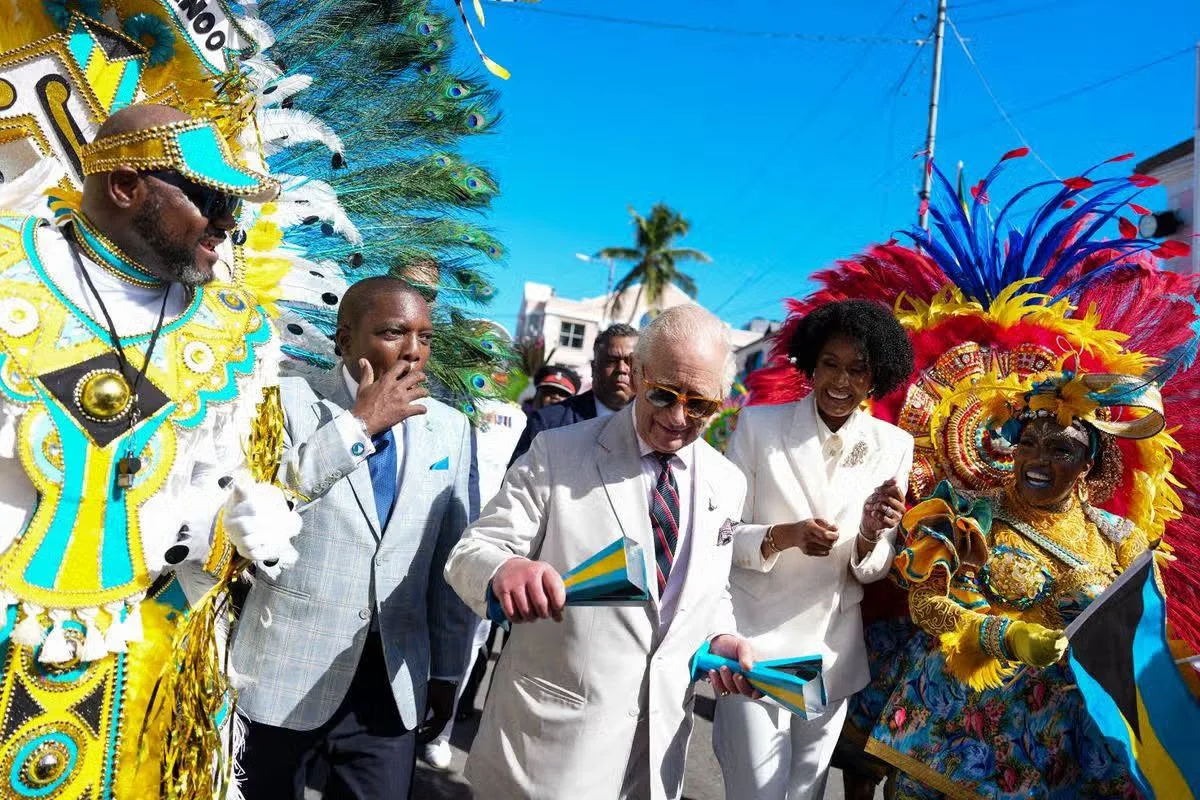
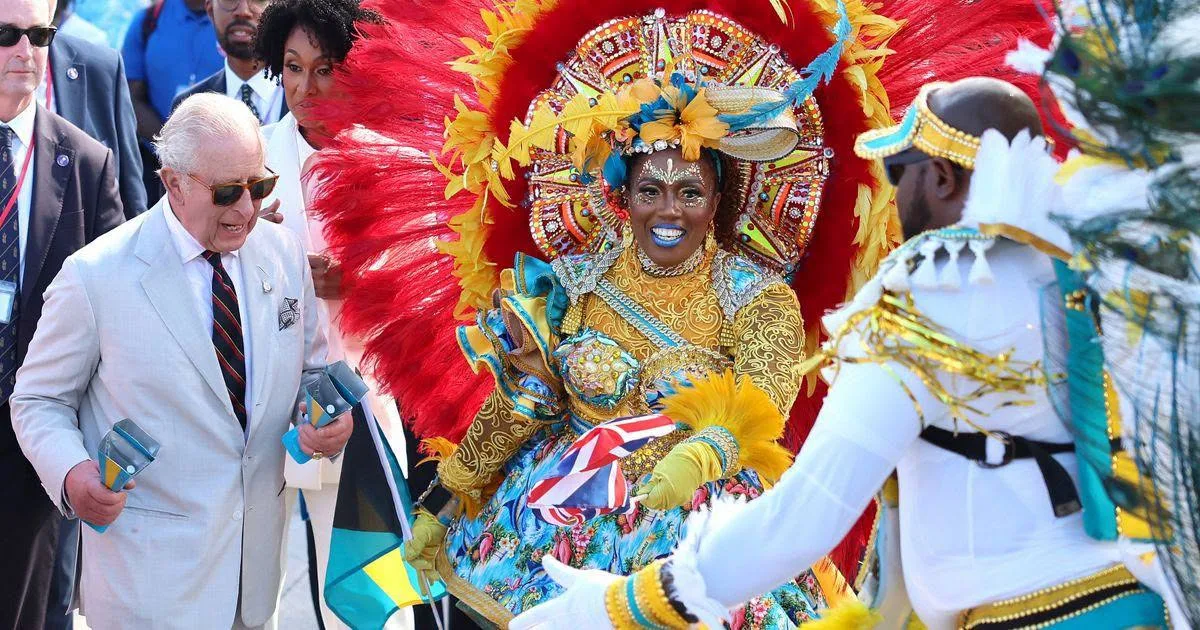
King Charles danced with Junkanoo performers in Nassau on Wednesday, a day after telling Bahamians it was “only right” to acknowledge “the great suffering and injustices of the past”. He has not apologised for them, and in line with UK government policy he is not going to.
The King joined the festivities in Parliament Square on the second day of his first official visit to The Bahamas as monarch. Reports say he watched much of the parade from the side before the dancers encouraged him to join in. Junkanoo is generally traced to enslaved people in the islands, who kept African drumming, masquerade and cultural dance alive under the rule of the people who enslaved them.
Buckingham Palace said before the tour that the King would not avoid “the darkest days of our past” but would not formally apologise, in line with a UK government that rules out both an apology and reparations.
The King's words, and the answer
On Tuesday, at a youth rally at Clifford Park, Charles said the best of Bahamian culture, “the most joyful, the most hopeful, the most bright”, was “born out of darkness”. He said it was “only right that we should acknowledge the great suffering and injustices of the past in these islands and beyond”.
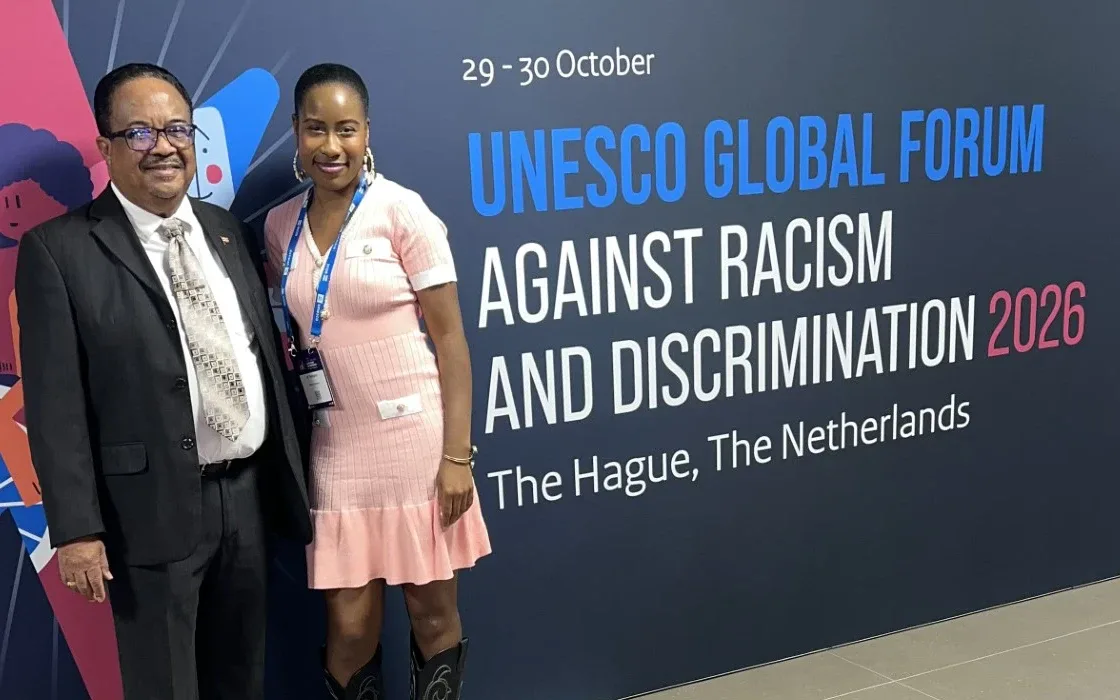
Acknowledging is not apologising, and Bahamians know the difference. Niambi Hall Campbell-Dean, chair of the Bahamas National Reparations Committee, asked: “Why do we still have a king?” A woman in the crowd shouted: “Pay us what you owe us!”
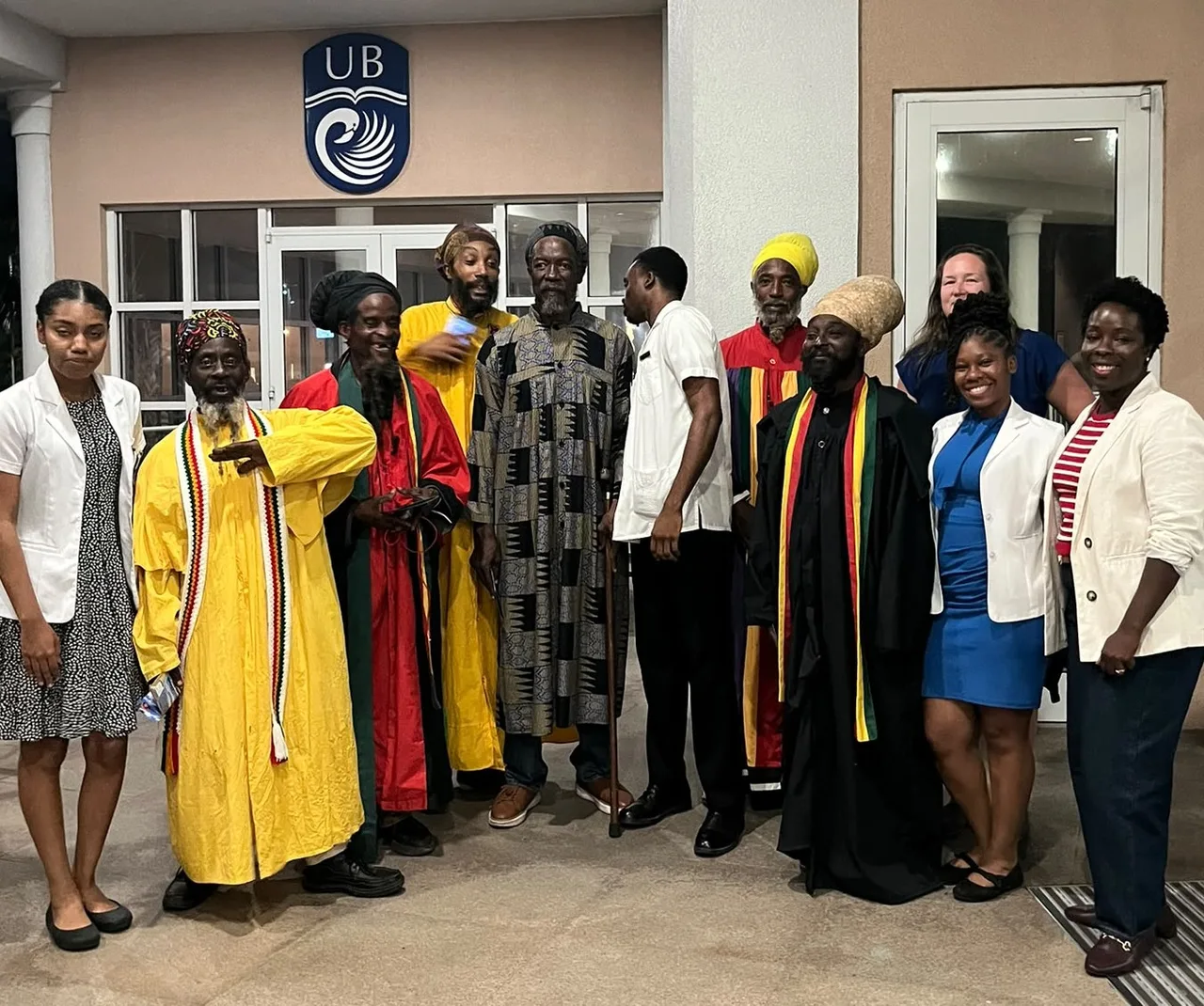
JAM Radio has spoken to the House of Rastafari in Nassau. Jah Mickey told us: “We don’t want words. We wanna see action.” He added: “Reparations is way more than money.” Read the story.
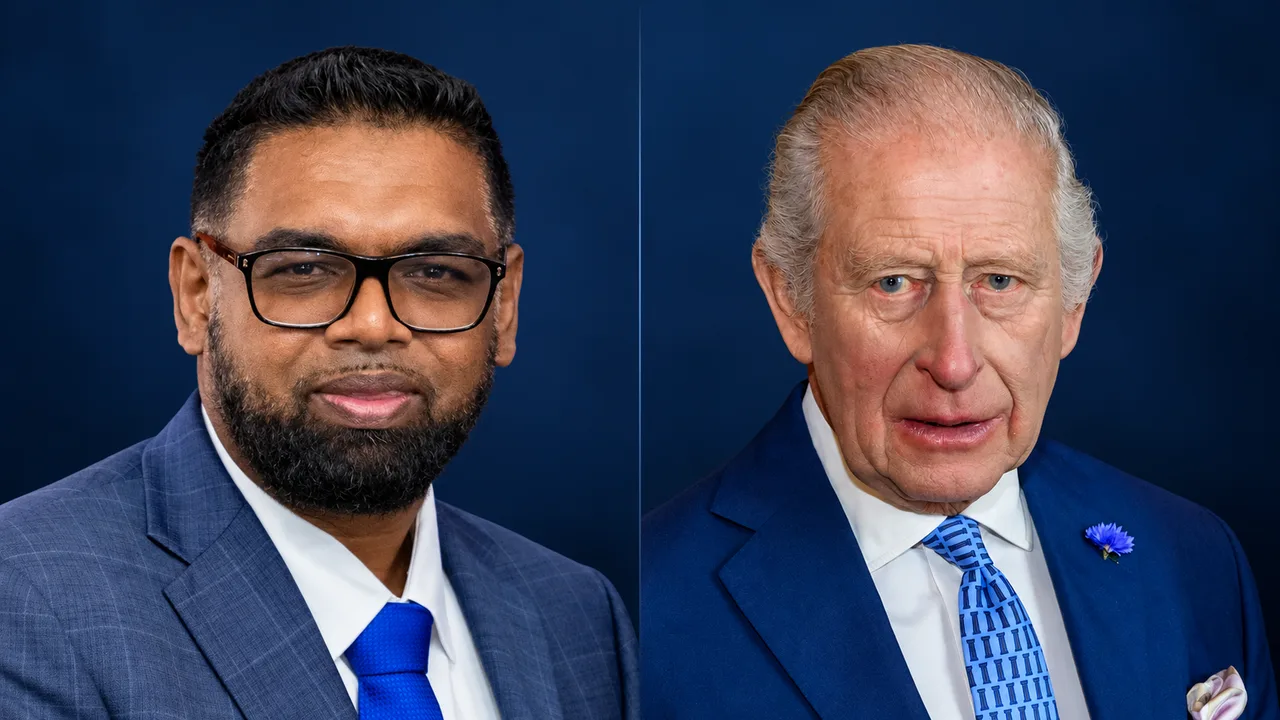
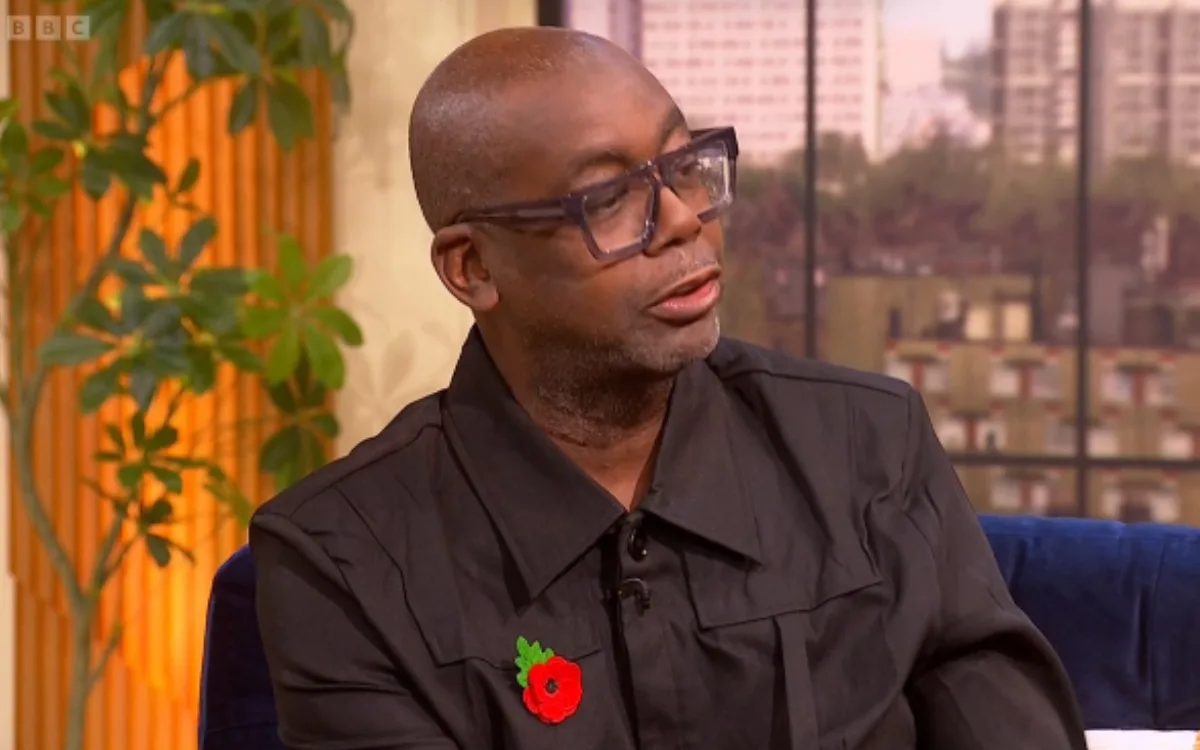
In Britain, Sir Patrick Vernon told BBC Sunday Morning Live on 25 October: “The King has to be on the right side of history.” Of enslaved Africans he said: “We were property. My ancestors were property.” Read the story. Guyana’s president, Irfaan Ali, has said an apology is “the next step”. Read the story.
The Crown was not a bystander
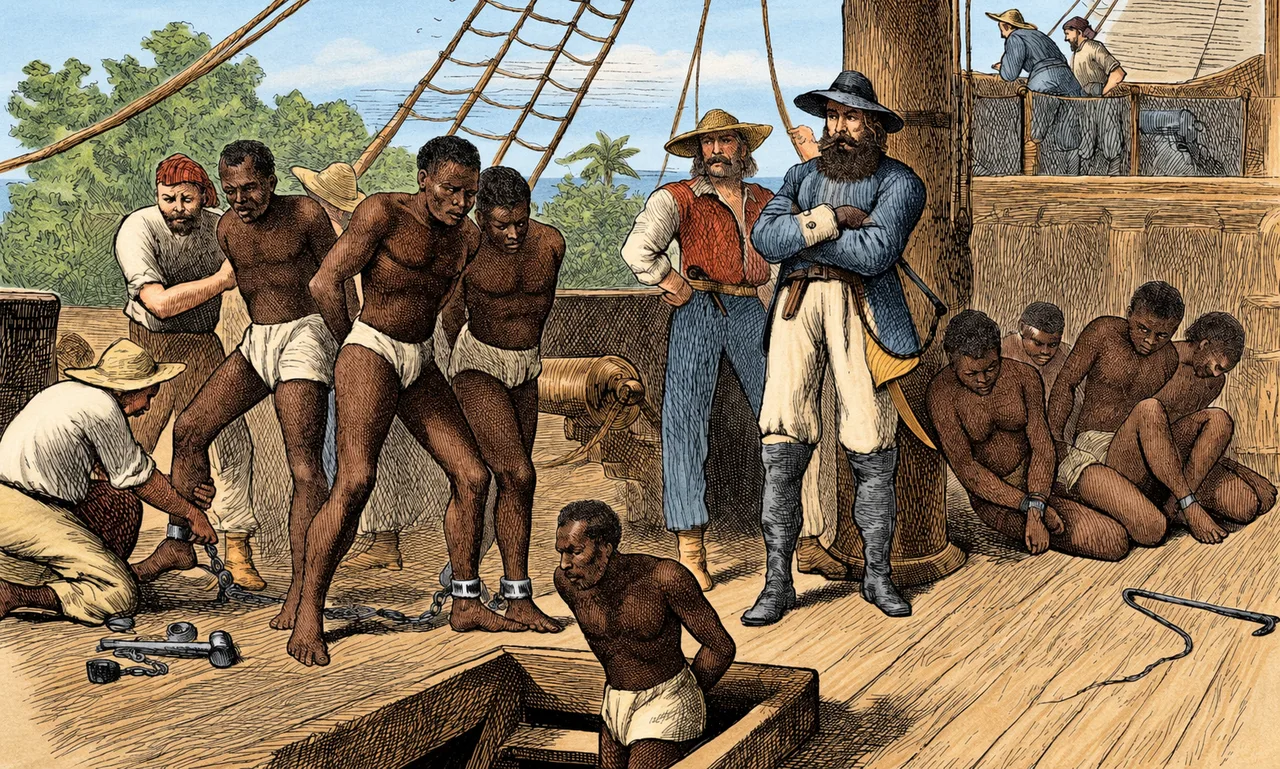
This is not a question about a distant government. The Crown was inside the trade.
The slave-trading company that became the Royal African Company was set up in 1660 under the Duke of York, later James II, with the involvement of his brother Charles II. In 1689. A document showing £1,000 of Royal African Company shares transferred to King William III, signed by Edward Colston, the slave trader whose statue was toppled in Bristol in 2020.
In 2023 the Guardian reported a further document, found by the researcher Desirée Baptiste: a 1686 Royal African Company record showing a direct ancestor of the present King helping to buy at least 200 enslaved people for delivery to Virginia, on a line that runs to the Queen Mother, the King’s grandmother.
That is the argument for reparations as it lands on King Charles III. He heads the institution that took part in the trade. He belongs to a family documented as profiting from it. The wealth, land and standing built in those centuries were handed down through the generations. Nobody has put a figure on how much of today’s royal inheritance came from slavery, and the King is in a position to ask for that question to be answered.
Buckingham Palace said in 2023 that it would support independent research into the monarchy’s links to slavery, with access to the Royal Collection and Royal Archives, and that the work was expected to conclude in September 2026. JAM Radio has not found published findings.
What comes next
From Nassau the King goes to Guyana, then to Antigua and Barbuda for the Commonwealth Heads of Government Meeting CHOGAM from 1 to 4 November, where Caribbean leaders are expected to press for reparations. Jamaica filed a petition in London in September, addressed to the King, with a Privy Council hearing expected in March 2027.
Sources used for this report10 verified links
- Tribune242: King returns after 53 years for historic visit (27 Oct 2026)
- Al Jazeera: King Charles's Caribbean tour, will he discuss slavery reparations? (27 Oct 2026)
- Caribbean National Weekly: King Charles acknowledges slavery's legacy during Bahamas visit
- Euronews: Bahamas, King Charles III dances with locals during Caribbean visit (29 Oct 2026)
- The Royal Observer: King Charles breaks into a dance in Bahamas
- History News Network, reprinting the Guardian (April 2023): documents confirm direct ancestors of King Charles III involved in slave trade
- Global News: King Charles supports research into monarchy's slavery links (7 Apr 2023)
- JAM Radio: King Charles Bahamas visit, Rastafari demands restitution and return of artefacts
- JAM Radio: Patrick Vernon, King Charles must apologise for slavery
- JAM Radio: Irfaan Ali calls for slavery apology and reparatory justice ahead of King Charles's Guyana visit