
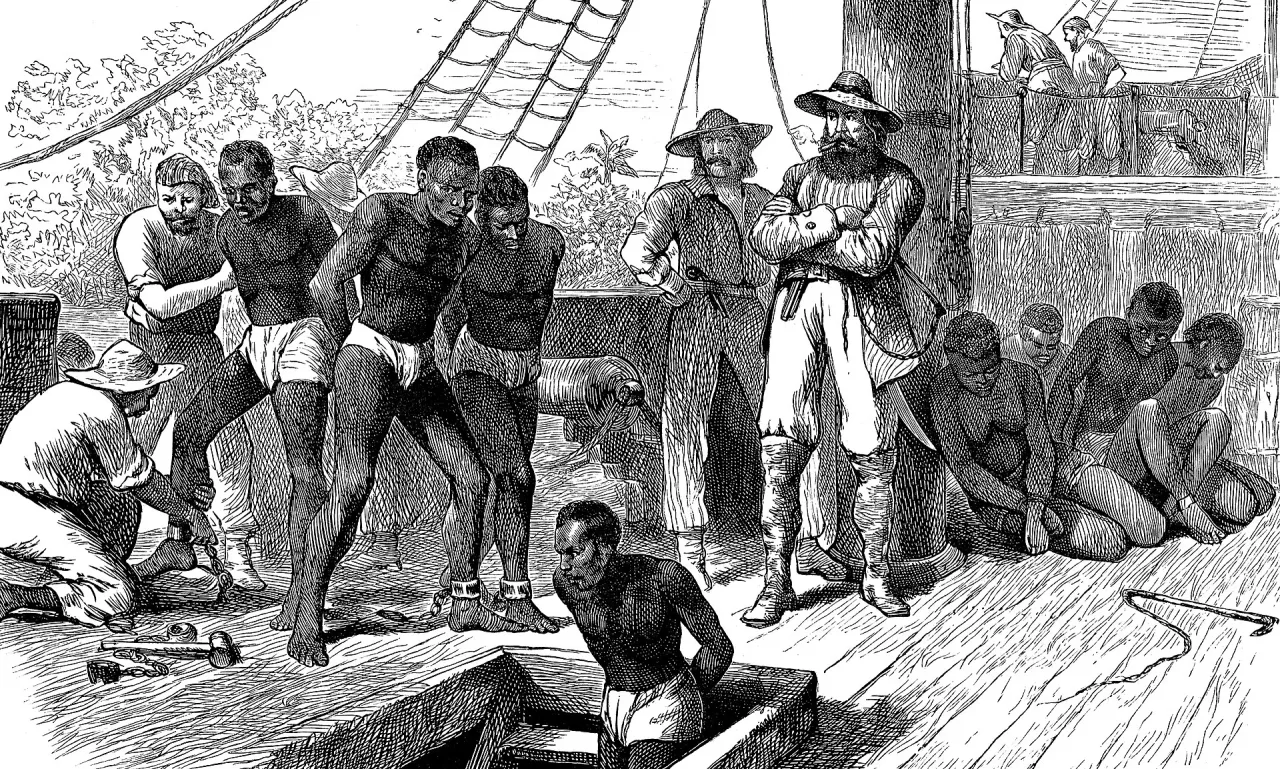

A Caribbean descendant of enslaved people is seeking to hold three Swiss cantons criminally accountable for helping finance slavery, taking the demand for justice beyond the colonial powers to the institutions that bankrolled their economies.
Shelley Moorhead, an activist from the US Virgin Islands, is behind a complaint against Zurich, Bern and Solothurn. It was submitted by Swiss lawyer Catherine Reiter in September and alleges complicity in enslavement through the financial activities of their historical predecessors.
The Swiss Office of the Attorney General is examining the complaint. That does not mean criminal proceedings have opened, or that any authority has been found guilty. The legal challenge remains unresolved.

Following the Caribbean money trail
The complaint is supported by a historical report from Hans Fässler. Its summary describes public investments and loans linked to slavery between 1719 and 1839, including shares in colonial trading companies and lending connected to Caribbean plantation economies.
The connections reach across the region: a plantation on St. Croix used as collateral, financing for the Danish Crown’s acquisition of the Danish Virgin Islands, and lending associated with Sweden’s colonial foothold on Saint-Barthélemy (St. Barths) know as the billionaire's playground in the Caribbean. The report also identifies a plantation company with Swiss roots in Berbice, in present-day Guyana.
Fässler identifies Zurich and Bern’s interests in the British South Sea Company, while Solothurn’s investments involved the French Mississippi Company. The central allegation is that public money helped sustain businesses and colonial structures dependent on enslaved labour.
Research already documents the links
An earlier University of Zurich study, commissioned by the city and published in 2020, provides independent historical context. It found that Zurich bought South Sea Company shares and was financially involved while the company transported thousands of enslaved Africans.
The researchers calculated that, during Zurich’s investment period, the company carried 8,636 people across the Atlantic and another 27,858 from predominantly British Caribbean islands, including Jamaica and Barbados, to Spanish colonies. Those figures describe the company’s trafficking during that period, not a fleet operated by Zurich.
The study also traced Danish government bonds purchased through the Zinskommission Leu financial institution to slavery in the Danish West Indies. For Caribbean readers, the connection is concrete: European capital was tied to the forced labour and trafficking of people in the region.

Can historical responsibility become legal liability?
Moorhead traces his ancestry to people enslaved in the former Danish West Indies. SRF reported in September that he seeks a criminal investigation, fines of five million Swiss francs against each canton, and compensation and redress for himself. These are demands, not awards or penalties already imposed.
The original complaint argues that slavery’s effects continue across generations, including lost opportunities to accumulate and pass on wealth. It seeks to connect those consequences to historical participation in enslavement and to establish a basis for financial reparations.
Reiter argues that the modern cantons can answer for their predecessors’ economic activities. SRF’s assessment highlights a substantial obstacle: the individuals involved are dead, and applying corporate-style criminal responsibility to cantons is disputed. Historical evidence of involvement does not automatically establish present-day criminal liability.
Accountability beyond the plantation
The broader history is also acknowledged by the Swiss National Museum. Its exhibition on colonial connections identifies Bern and Zurich as South Sea Company shareholders and documents Swiss involvement in plantation ownership, trading and the deportation of enslaved people.
For JamRadio, the complaint raises a question central to the Caribbean reparations debate: how far should accountability extend through the financial networks that made slavery profitable? Investors and lenders could benefit far from the plantations where people endured the violence.
Whether Moorhead’s complaint can overcome the legal barriers remains open. For now, it puts specific Swiss public institutions, their historical investments and a Caribbean descendant’s demand for redress before federal prosecutors.
Sources used for this report7 verified links
- SWI swissinfo.ch: Three Swiss cantons accused of historical complicity in slavery (11 October 2026)
- Original criminal complaint by Catherine Reiter for Shelley Moorhead (1 September 2026, German PDF)
- Hans Fässler: Historical expert report supporting the complaint (PDF; English summary)
- University of Zurich: Zurich Was Linked to Slavery through State Bonds, Trade and Plantations (2020)
- SRF: Slavery complaint against Swiss cantons—political and legal prospects (14 September 2026, German)
- Swiss National Museum: Colonial—Switzerland’s Global Entanglements
- SWI swissinfo.ch: Rights to content and liability (image reuse review)