Published 112 views
Owen Jones brands the singer a “coward” as a damning old Wiley clip resurfaces and Sheeran’s remaining tour artists walk away.
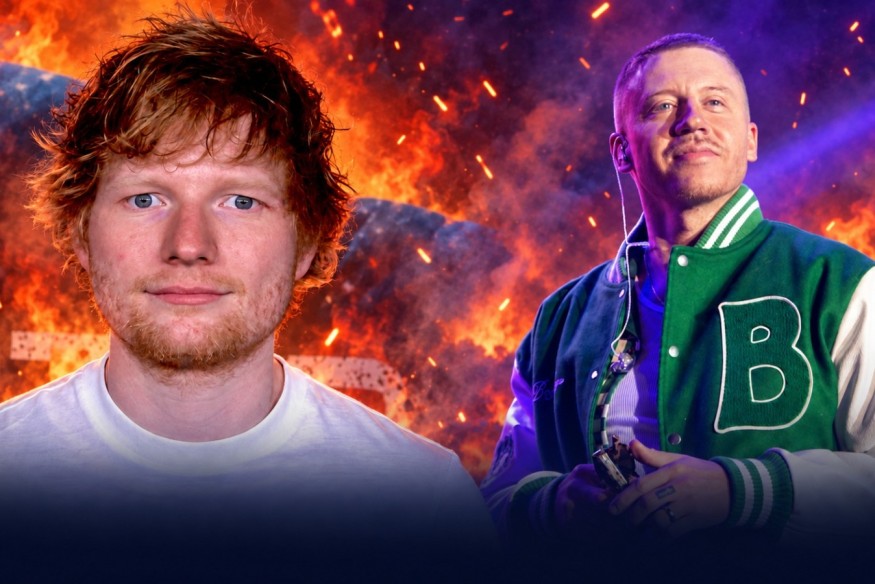
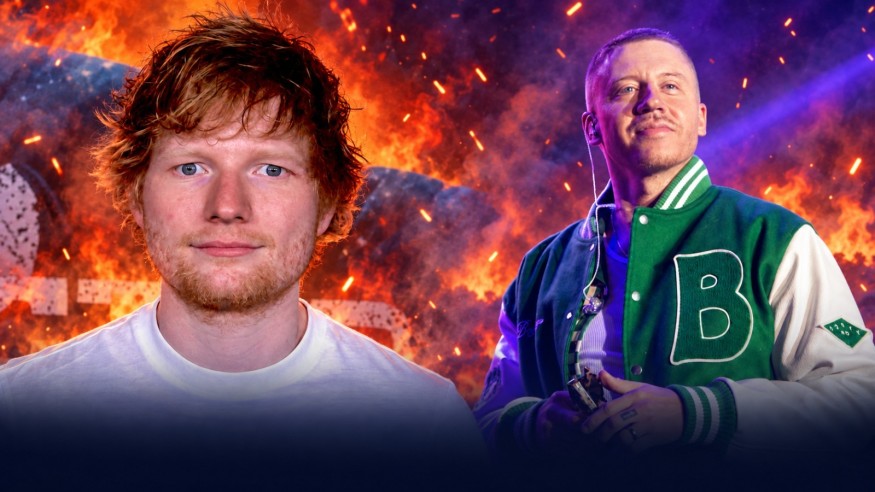
Ed Sheeran is no longer facing a passing controversy. He is standing in the middle of a wildfire.
What began with Macklemore being removed from Sheeran’s Loop Tour after declaring “Free Palestine” onstage has developed into one of the most damaging reputational crises of the British singer’s career.
Advertisement
Collect AKIMYAX Anime Keyrings
Pocket-sized personalities created by young artist Xaymika.
SHOP AKIMYAXHis remaining supporting artists have walked away. An Irish radio station has removed his music. Macklemore is donating his entire $1 million tour salary to Palestinian organisations. And now the criticism is becoming increasingly personal.
British political commentator Owen Jones delivered one of the bluntest verdicts yet on Thursday:
“Ed Sheeran is a coward.”
Ed Sheeran is a coward. pic.twitter.com/tCSTrt2wym
— Owen Jones (@owenjonesjourno) September 17, 2026
Jones’s video followed an earlier attack in which he condemned Culture Secretary Lisa Nandy for expressing sympathy for Sheeran.
“Macklemore gets cancelled for opposing a genocide,” Jones wrote. “And who does Lisa Nandy feel sorry for? Ed Sheeran. So unbelievably pathetic.”
Every supporting artist walks away
The crisis began after Macklemore used his appearance at New Jersey’s MetLife Stadium to perform his protest song Hind’s Hall, display images from Gaza and declare: “Free Palestine.”
Billionaire New England Patriots owner Robert Kraft, whose company owns Gillette Stadium, subsequently refused to allow Macklemore to perform at the venue.
According to Macklemore, Kraft also contacted other stadium owners, leaving Sheeran’s tour with an ultimatum: remove Macklemore or risk losing several major venues.
Sheeran insists the final decision was made by the tour’s promoter and the venues—not by him.
But his attempt to distance himself from the decision did not stop the fallout.
Advertisement
Collect AKIMYAX Anime Keyrings
Pocket-sized personalities created by young artist Xaymika.
SHOP AKIMYAXFinneas, Aaron Rowe, Lukas Graham and Irish band Beoga all withdrew from the remaining dates in solidarity with Macklemore and the Palestinian people.
“Artists must not be silenced when they speak up for the oppressed,” Finneas said.
Rowe said that as an Irishman he understood the history of “genocide, forced famine and violent occupation”, while Beoga declared that performing in venues which silence support for a free Palestine was “simply not an option”.
Lukas Graham warned that money should never decide who is permitted to speak or which suffering the public is allowed to acknowledge.
Their departures have left Sheeran’s claim of powerlessness looking increasingly difficult to sustain.
Irish station removes Sheeran’s music
Ireland’s Classic Hits Radio has now announced that Sheeran’s music will be removed from its playlist “for the foreseeable future”.
The independent Irish-owned broadcaster said it received feedback from listeners expressing disappointment and concern over the treatment of Macklemore.
While acknowledging Sheeran’s explanation, the station said it wanted to stand alongside Irish artists Aaron Rowe and Beoga after they surrendered significant professional opportunities by leaving the tour.
“Our position is a simple one,” the station said. “We believe in peace, humanity and respect.”
The station said its decision would remain under review.
Wiley’s old warning returns
Wiley clocked Ed Sheeran years ago ???? pic.twitter.com/y5XIIDSfED
— Matthew Walker (@matthewjswalker) September 16, 2026
As the backlash spreads, an older attack from grime pioneer Wiley has returned with new force.
A video shared by Matthew Walker under the caption “Wiley clocked Ed Sheeran years ago” has attracted hundreds of thousands of views.
The clip originates from Wiley’s earlier dispute with Sheeran, when the grime veteran branded him a “culture vulture” and accused him of benefiting from Britain’s Black and grime music infrastructure without properly reciprocating.
Wiley referenced platforms such as SBTV and the underground radio culture which helped establish Sheeran’s credibility before his transition into global pop stardom.
The resurfaced footage is especially striking because Wiley was not simply an outside critic. He collaborated with Sheeran during the singer’s early career, including on the 2011 track If I Could.
Sheeran rejected Wiley’s accusations at the time, insisting that he had deep love and respect for grime and for the artists who helped him.
But amid the Macklemore controversy, Wiley’s old criticism is being viewed through a new lens: that Sheeran is comfortable drawing upon marginalised cultures when it benefits his music, but unwilling to accept the risk that comes with defending their voices.
The problem with “neutrality”
Sheeran says his concerts are intended to provide “unity, joy, escapism and love”, rather than political debate.
He has insisted that choosing not to speak publicly does not mean he lacks personal views or does not care about Palestinian suffering.
But critics say the removal of Macklemore was itself a political act.
When an artist is excluded after speaking about Palestine, while billionaire venue owners retain the power to determine what can be said from the stage, accepting that outcome cannot credibly be described as neutrality.
Sheeran’s defence is further complicated by his previous political interventions. He performed at the Concert for Ukraine, opposed Brexit, expressed support for Jeremy Corbyn and has publicly campaigned against racism and government cuts to music education.
The question is therefore not whether Ed Sheeran becomes political.
It is why Palestine appears to be the issue on which his platform must suddenly become politics-free.
Macklemore puts Gaza back at the centre
Macklemore has announced that he will donate his entire $1 million net earnings from the tour to six organisations supporting Palestinians.
He challenged Kraft to match the donation, saying that whatever their disagreements, they should agree that Palestinian lives are worth protecting.
Kraft later said Sheeran had already approached him about making a $2 million humanitarian contribution. Kraft agreed, although the recipients were not immediately identified.
That may help Sheeran demonstrate that he is not indifferent to Palestinian suffering.
But it does not answer the central question: why did publicly defending Palestinians result in Macklemore being removed from the stage?
With his supporting artists gone, an Irish radio station refusing to play his music, Owen Jones branding him a coward and Wiley’s old warning roaring back across social media, the attempt to contain this crisis has plainly failed.
Ed Sheeran is not putting out the fire.
It is spreading.