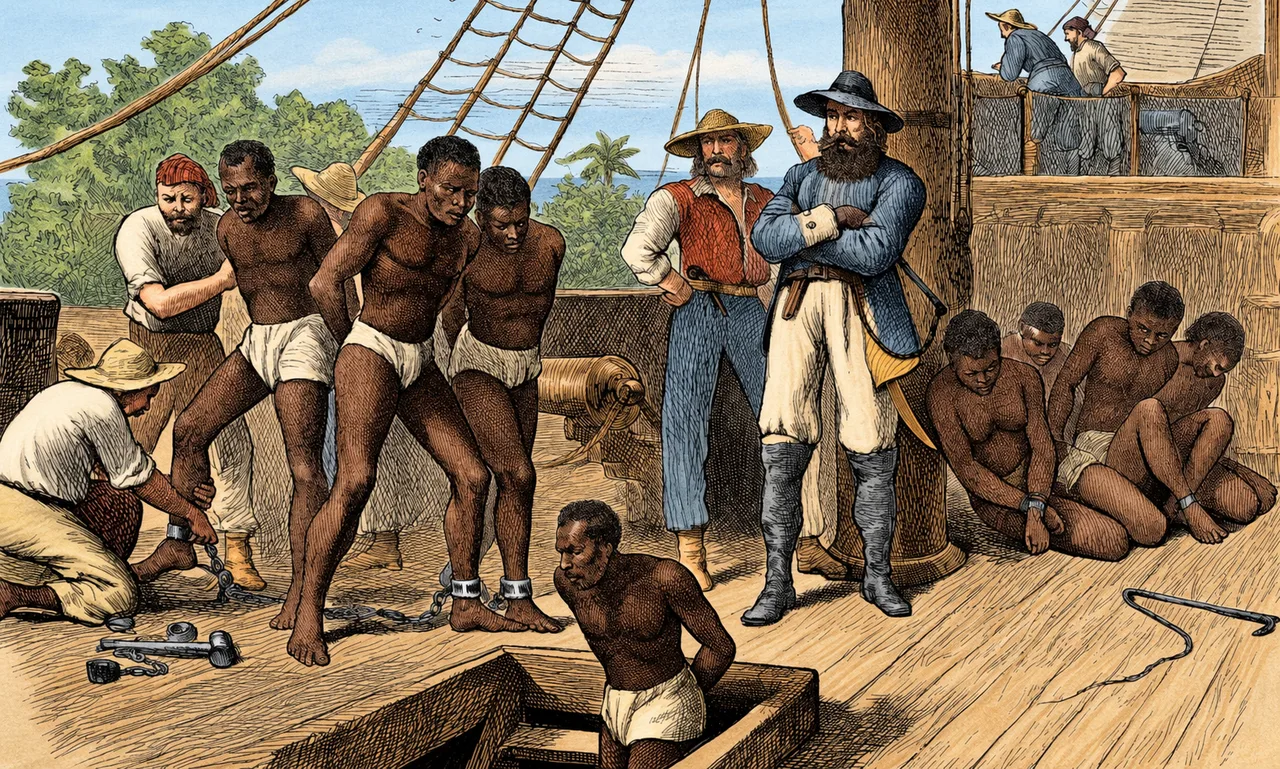
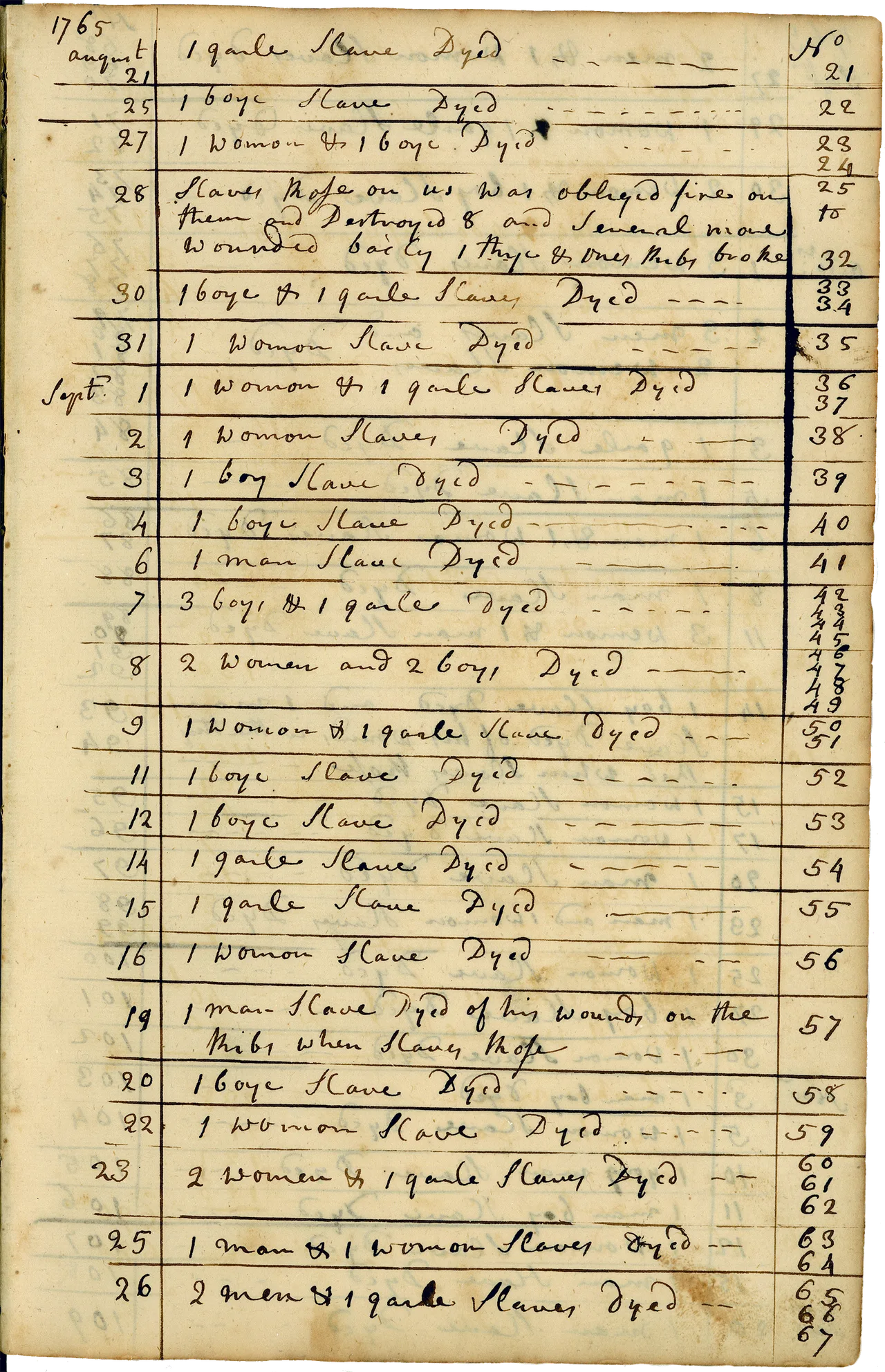
Eight people were killed when captives aboard the slave ship Sally rose against their captors. The account book recorded the shooting in a single entry:
“Slaves Rose on us was obliged fire on them and Destroyed 8 and Several more wounded badly 1 Thye and ones Ribs broke”
The entry, dated 28 August 1765, belongs to a voyage on which, in Brown University’s reconstruction, at least 109 of the 196 Africans being transported into slavery by the captain died. Its owners included Nicholas Brown, an ancestor in the family line of William Stonor, the present Lord Camoys.
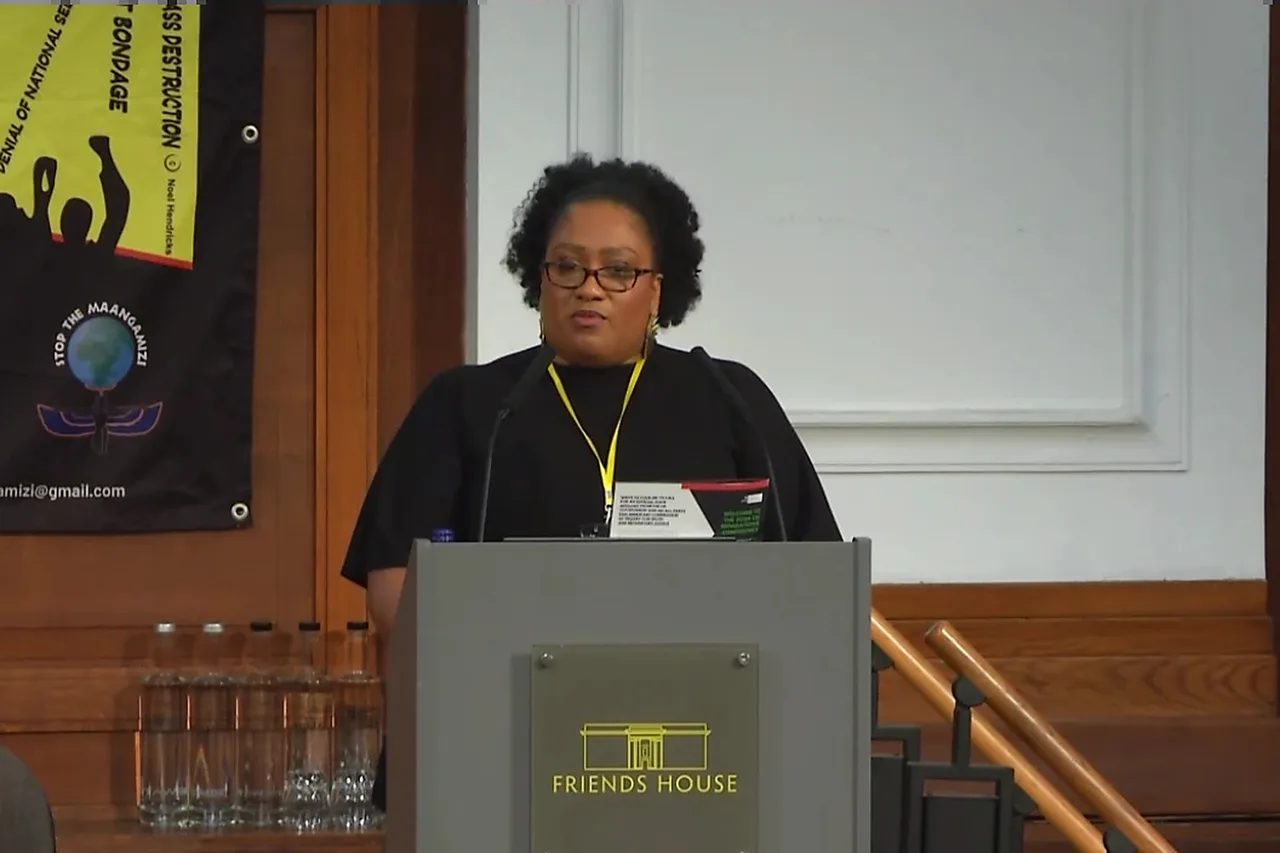
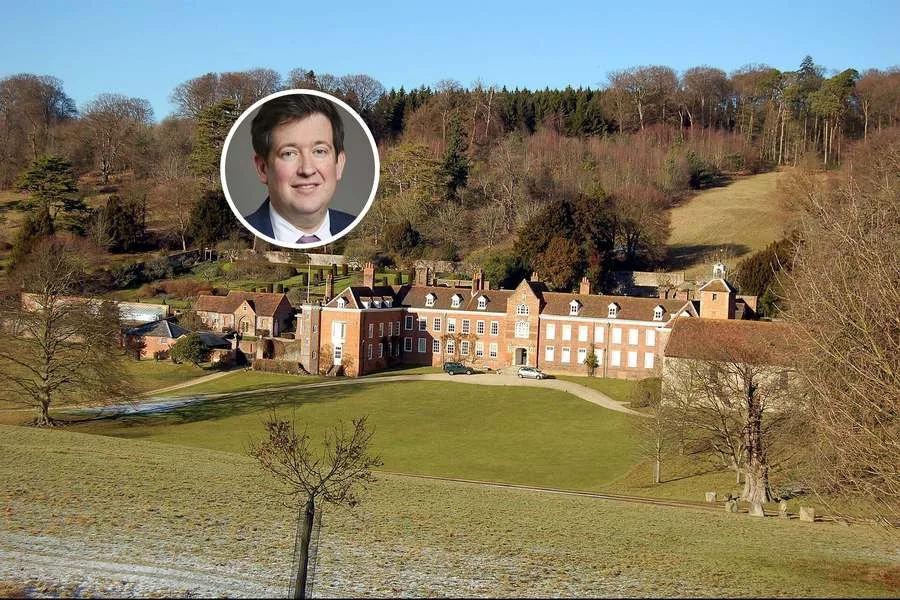
Lord Camoys sits in the House of Lords today. His hereditary right to do so ended on 29 April 2026. He was then nominated for a life peerage by the Conservative leader, and Parliament records his return on 17 June.
This story puts together what the public record shows connecting him to the voyage.
The business of buying people
The Sally was a company venture. After Obadiah Brown’s death in 1762, the business passed to his nephews Nicholas, John, Joseph and Moses, trading as Nicholas Brown & Company. Their interests included a candle works, an iron furnace and overseas commerce. In 1764 they sent the ship to Africa.
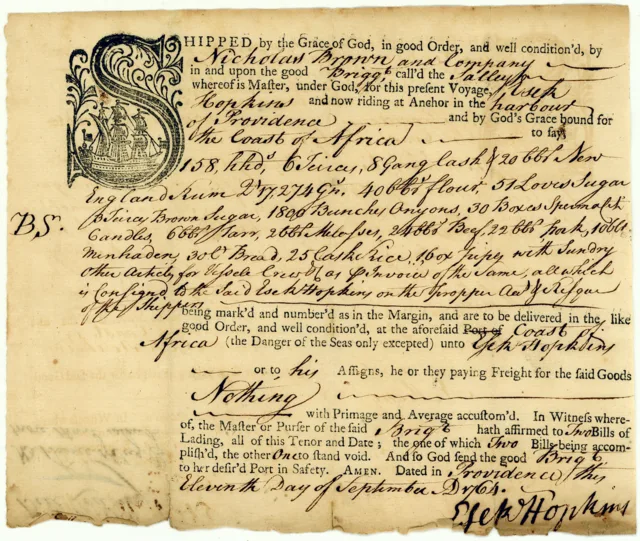
The bill of lading records what went out: 17,274 gallons of New England rum, 1,800 bunches of onions and 30 boxes of spermaceti candles. Above the quantities stand the names of the company, the vessel and its captain, Esek Hopkins.
The owners’ instructions, dated 10 September 1764, specified what was to come back. Hopkins was to sail to the Windward Coast of Africa, exchange the cargo for enslaved people and sell them in the Americas. They also required four young captives, about 15 years old, to be brought home for the owners.
“Dispose of your Cargo for Slaves”
From the owners’ instructions to Esek Hopkins, 10 September 1764. Archive transcription.
Hopkins had his own financial stake: ten captives to sell on his own account, and a commission on the sales. Human beings were the merchandise, a source of labour for the owners and payment for the captain.
Brown University’s reconstruction describes more than nine months spent acquiring captives on the African coast. People died before the Atlantic crossing began. Others died from disease, starvation and suicide, or were shot during the uprising. Survivors were sold in Antigua; further deaths followed the ship’s arrival in the Caribbean.
The ledger preserves that violence in the language of an account. Its repeated categories — men, women and children — describe people whose deaths were entered as the voyage continued. The record of the shooting is the captors’ account, including their claim that they were obliged to fire.
The expedition lost money. Nicholas, Joseph and Moses subsequently withdrew from direct transatlantic slave trading, although Brown’s report records their continuing commerce in slave-produced goods and supplies for other slave voyages. Moses later freed the people he enslaved and became an abolitionist; John, however, continued slave trading. The brothers did not follow a single course thereafter.
The line to Camoys
The connection runs through Mildred Constance Sherman. Her mother, Sophia Augusta Brown, was John Carter Brown’s daughter. John Carter was the son of Nicholas Brown Jr (1769–1841), whose father was Nicholas Brown Sr (1729–1791). In 1911 Mildred married Ralph Francis Julian Stonor, the 5th Baron Camoys.
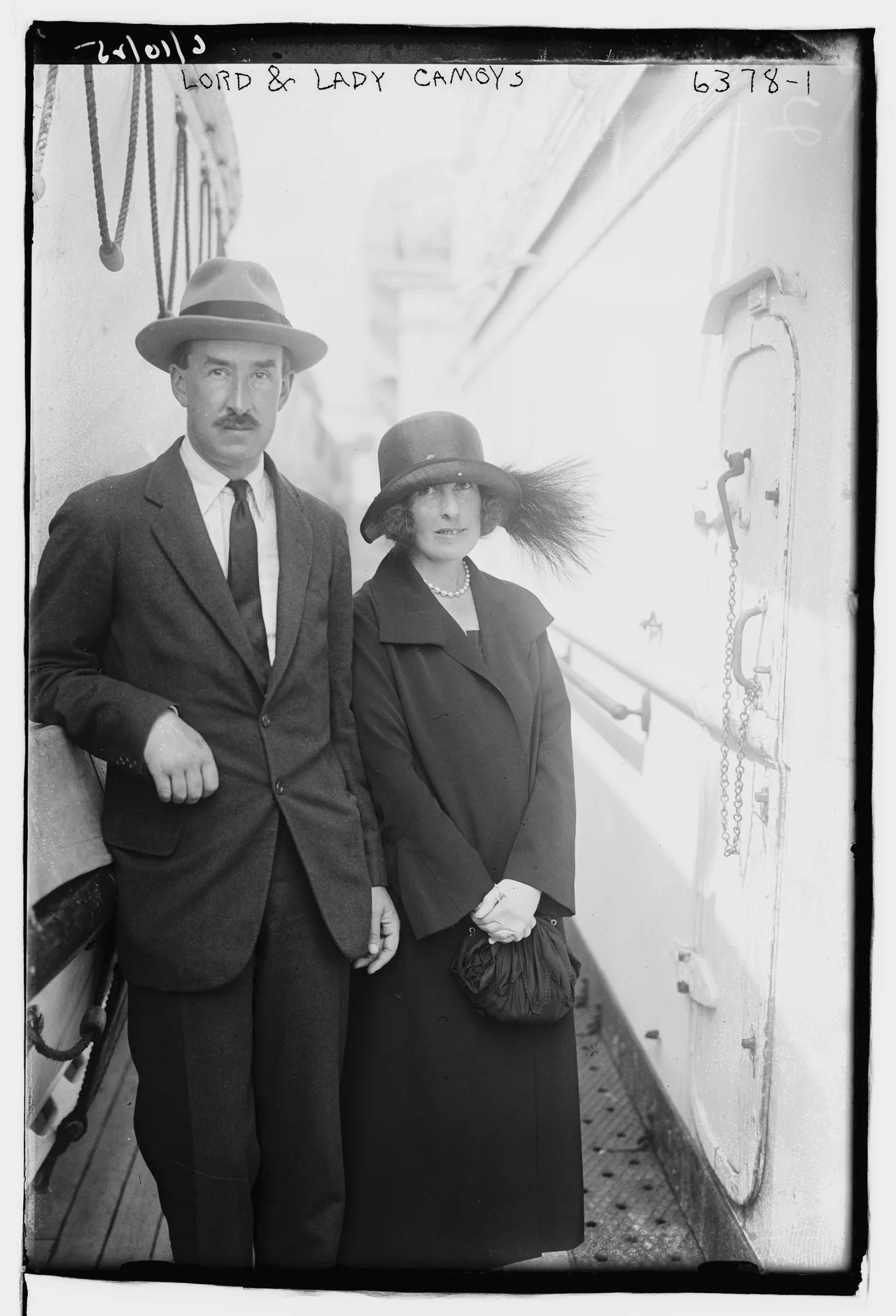
A genealogy reprinted from the Rhode Island Historical Society Collections in 1918 records the marriage and the birth of their son, Ralph Robert Watts Sherman Stonor, in 1913. He became the 6th Baron. The published succession runs through his son Thomas, the 7th Baron, to William, the present Lord Camoys.
“Mildred Constance Sherman, July 3, 1888, m. Nov. 25, 1911, Ralph Francis Julian Stonor, The Baron Camoys”
John Carter Brown Woods, John Carter and His Descendants (1918), printed page 12. Transcribed extract, not a civil certificate.
The 5th Baron married into this line; he is not part of the descent. Each name below is the child of the one above.
Family possessions also passed down the line. Christie’s catalogued a Chinese export punchbowl bearing the initials “NAB”, probably made for Nicholas Brown Jr and his wife Ann. Its ownership history lists John Carter Brown, his widow, possibly their daughter Sophia, then Mildred Sherman — Lady Camoys — and her daughter Noreen Drexel.
The accompanying essay describes John Carter inheriting the family business and Providence house from his father in 1841. Citing a 1909 newspaper report, it also describes his widow leaving the bulk of her estate to her daughter and granddaughters, including Mildred.
A trust deed dated 25 November 1911, the day of the wedding, was filed in Providence in March 1914, according to the New York Times. It placed all of Mildred Sherman’s property, including what she had inherited from her grandmother, Sophia Augusta Brown, in the hands of two trustees for her sole use. Her husband’s entitlement under the deed arose only if she died before the age of 35. If she died before then leaving children, they were to share the estate; if she reached 35, it became hers outright, to pass to her heirs. Their son, born in 1913, became the 6th Baron. The report does not give the value of the estate or say what became of it.
What Lord Camoys holds today
The present-day holdings are recorded in a different set of documents. Camoys’s parliamentary register lists income-producing residential and commercial property in Oxfordshire, rental property in London, and land in Buckinghamshire and Suffolk. His remunerated roles include a directorship of Wormsley Estate Limited, a farming partnership and forestry advice.

His shareholdings include Stonor Enterprises Partner Limited, investment company Narragansett Limited, film-studio company Dido Topco, Nvidia and 3i. These are declared interests, not a valuation of his wealth or evidence that the investments were financed by historical slavery.
At Companies House, Stonor Enterprises LLP records Lord Camoys as a person with significant control, holding at least 75% of voting rights and rights to at least 75% of surplus assets, together with the right to appoint or remove members.
He joined the Industry and Regulators Committee on 22 June.
JamRadio wrote to Lord Camoys at his Stonor Park email address, and to the contact address published on his parliamentary page, on 28 September. On 1 October it wrote to Stonor Park’s enquiries address and telephoned Stonor Park, where someone who handles the family’s personal affairs said they would pass the message on. None of the approaches had received a reply by publication.
The family records preserve names, marriages and successions; the voyage records preserve instructions, sales and deaths. Read together, they place the Brown connection within the history of a family still represented in Britain’s legislature. They also return attention to the people at the centre of the Sally’s story: Africans bought, transported and sold, including children. At least 109 of the 196 did not survive.
Sources used for this report18 verified links
- Lord Camoys: official parliamentary portrait and licence
- UK Parliament: official portrait attribution requirements
- Lord Camoys: parliamentary career
- Sally account book, page 86
- Brown University: Slavery, the Slave Trade, and Brown University
- John Carter Brown Woods, John Carter and His Descendants (1918), printed pp. 7–12
- Michael Rhodes, obituary and succession of the 7th Baron Camoys (4 January 2023)
- Lord Camoys: Register of Interests, checked 1 October 2026
- Stonor Enterprises LLP: persons with significant control
- Christie’s: Chinese export punchbowl, circa 1795, provenance and lot essay
- Rhode Island Historical Society: Moses Brown Papers, MSS 313
- Sally bill of lading, September 1764
- Nicholas Brown & Company to Esek Hopkins, 10 September 1764: archive transcription
- Bain News Service, Lord & Lady Camoys, Library of Congress, LCCN 2014718365
- Stonor Park: family history
- House of Commons Library: Peerages and membership of the House of Lords
- Prime Minister’s Office: Political Peerages, 12 May 2026
- The New York Times: Pre-nuptial deed of the Camoys filed (19 March 1914)