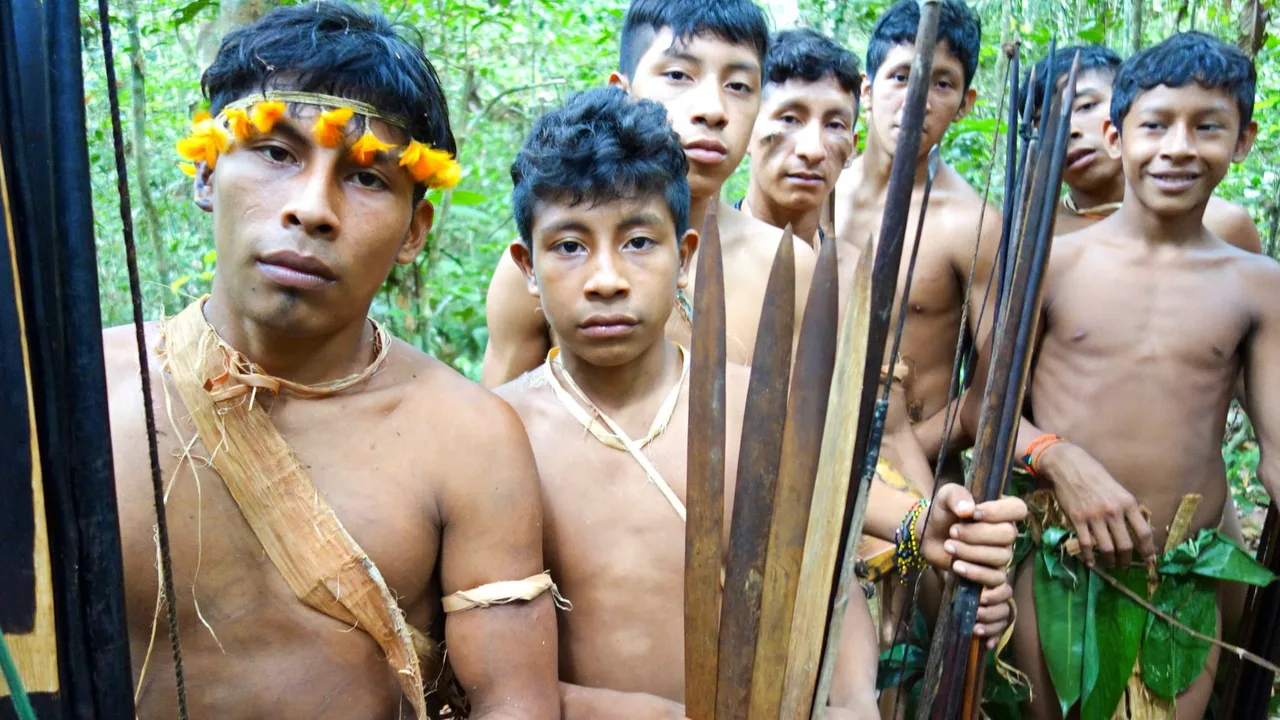

A rare encounter involving members of the Awá Indigenous people in Brazil’s Amazon has renewed calls to protect their land and health, after footage showed a group who live in voluntary isolation approaching a neighbouring community.
The encounter took place on 16 November in the Arariboia Indigenous Territory in Maranhão state. Indigenous rights organisation Survival International said around 20 Awá people approached a government post, asked for yams and took them back into the forest. Members of the neighbouring Guajajara community filmed the encounter.
The Awá are a Tupi-Guarani people, some of whom live in voluntary isolation. Advocates say illegal logging, hunting and cattle ranching have put growing pressure on their territory. Survival International said that pressure could be a reason the group sought food, although the precise reason has not been established.
Brazil’s Indigenous affairs agency, Funai, told Reuters it was reviewing footage and accounts of the encounter. It said the Brazilian state was not seeking contact with the group, in keeping with its non-contact policy.
The Guajajara Forest Guardians, who work to defend the territory against illegal encroachment, have called for action to protect the Awá’s land, health and autonomy. They asked Survival International to release images of the encounter to draw attention to threats facing the community.
The encounter has also raised concern about the risk of disease for people who have had little contact with outsiders. Indigenous advocates say protecting their territory and respecting their choices must remain central to the response.