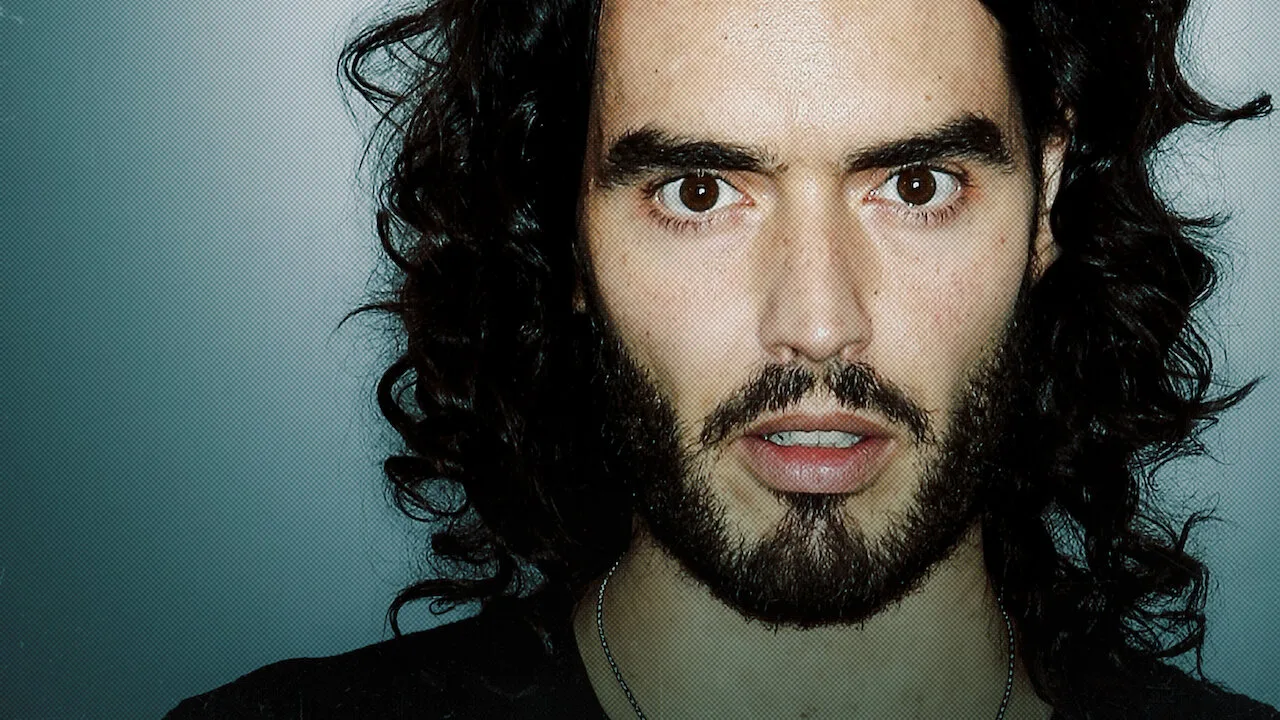
Netflix has released Russell Brand: Open Secret, a feature-length documentary about the comedian and former film star, which began streaming today, Friday 13 November 2026. It arrives days after Brand was sentenced to 10 and a half years in prison.
A London court found him guilty on 5 November of one count of rape and three counts of sexual assault. He was found not guilty of two other counts of rape and one count of attempted indecent assault. The sentence was passed on 9 November.
What kind of film it is
Directed by Olivia Isaacs and produced by 72 Films, the Fremantle company behind Netflix's Jimmy Savile: A British Horror Story, the 1 hour 24 minute film is not a courtroom drama. It sets out to explain how Brand's career, from stand-up and Hollywood to political activism and YouTube, ran alongside allegations that went unexamined for years. It builds that account from archive footage and interviews with people who knew him, and returns to the 2023 investigations by The Times, The Sunday Times and Channel 4's Dispatches.
Isaacs told Netflix's Tudum site that her team began filming three years ago, before any charges, and held back anything that could prejudice the trial. She says the aim was to understand Brand and the worlds he moved in, and why the allegations did not come to light sooner. In her words, the verdict does not change what the film is: a look at how this was possible and "how it stayed hidden for so long".
What the film shows
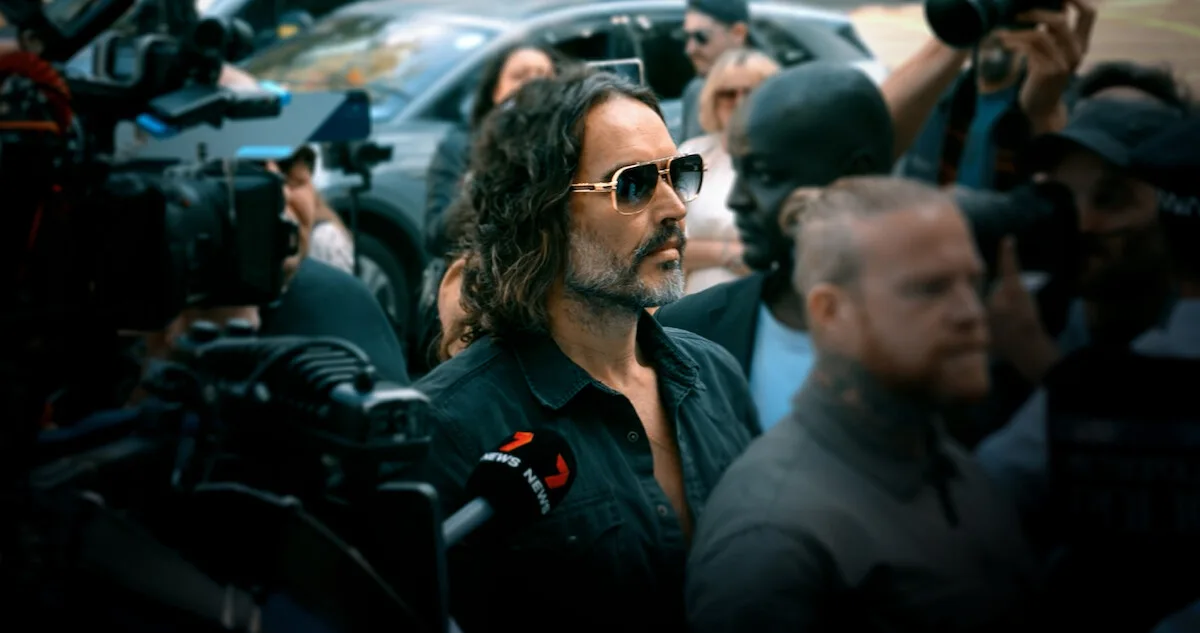
The Evening Standard, which picked out five of the film's most striking moments, says it includes accounts from former partners. One woman, identified only as Emily, alleges that Brand raped her after she asked him to use a condom. Another, who dated him for six months in 2007, describes controlling behaviour and repeats an allegation that he sexually assaulted her in a hotel room. The Standard says Brand's lawyers acknowledged requests for comment but did not respond directly to the allegations, and notes that Brand has previously denied any non-consensual sexual acts.
The Standard also highlights archive material: a 2013 TV appearance in which Brand makes a remark about having raped someone, to which others in the footage react, and clips in which he calls himself a "scumbag" and says he has done things he is ashamed of. The film also claims he sought out women in his comedy audiences, which the Standard says raises questions about the imbalance of power between a famous performer and his fans.
Isaacs told Netflix the testimony points to a pattern including coercive control and emotional abuse, and that the archive of the time, including audiences laughing along, shows how the culture around Brand worked. She says the team spoke to hundreds of people, not all of them with allegations, and that the survivors who appear were not part of the trial.
What the first reviews say
The first reviews are in, and they are broadly positive about the film's approach while stressing how hard it is to watch.
The Times headlines its review "a bleak but instructive watch". Its standfirst says the documentary adds new layers to the story, such as an interview with a former girlfriend, and that in detailing how Brand was exposed it shows the value of proper journalism. The paper's own reporters, Rosamund Urwin and Charlotte Wace, are central to the film, a connection worth bearing in mind when reading its verdict. The full review is behind The Times's paywall.
Decider, the US entertainment site, rates it "Stream It" in its stream-it-or-skip-it verdict. Critic Sean L. McCarthy calls it a tough watch and says its strength is putting people who saw Brand's behaviour first-hand at the front of the film, among them his former housemate Mark Pinheiro and former partners Amanda Alguero Alejos and Jordan Martin. He says it does not feel like a rush job, but a film researched and waiting for the verdict.
McCarthy picks out Nish Kumar's reflection that Brand was bragging about his behaviour on stage and on TV, and that people should have taken him at his word. He also notes Urwin's account that she began investigating in 2019, that women would speak but not on the record for fear of legal action, and her view that Brand's habit of admitting things in his stand-up and books helped to normalise them. His one reservation is what the film leaves out: why Brand's later turn to politics, American conservatives and evangelicals found so many sympathisers, which he says is "another documentary".
The criticism
Not everyone welcomed the film. Some social media users have accused Netflix of profiting from abuse and questioned the timing, according to IBTimes UK, which reports no response from Netflix or the production company and notes that the documentary's earnings and any payments to participants have not been disclosed. The same piece says the film's production timeline does not support a suggestion that it was prepared around the verdict.
Critics also point to a longer-running question: Netflix still carries Brand's 2018 stand-up special Re:Birth. IBTimes UK reports that Netflix has stopped recommending it and removed it from search, but that subscribers can still reach it.
Who is in it
Interviewees include The Times and The Sunday Times journalists Rosamund Urwin and Charlotte Wace, comedians Nish Kumar and Harriet Kemsley, the Guardian columnist George Monbiot, and the actor and writer Sarah Solemani. Others who knew Brand include Laura Conder, who produced with him on Stay Free, his former housemate Mark Pinheiro, former partners Amanda Alguero Alejos and Jordan Martin, and the former model Georgina Baillie. Netflix says alleged victims whose identities are protected also appear. The executive producers are Clare Cameron, David Glover and Mark Raphael.
If you or someone you know has been affected by sexual violence, support in the UK is available from Rape Crisis (England & Wales) and the Survivors Trust.
Sources used for this report7 verified links
- The Times – Russell Brand: Open Secret review — a bleak but instructive watch
- Decider – 'Russell Brand: Open Secret' Netflix review, Stream It or Skip It?
- Netflix Tudum – Russell Brand: Open Secret release date and news
- Netflix – Russell Brand: Open Secret (official title page)
- Evening Standard via Yahoo News UK – Five most shocking moments in new Netflix Russell Brand documentary
- IBTimes UK – 'Another Abuse Documentary?': Netflix's Russell Brand project raises questions about true-crime profits
- SoapCentral via AOL – Why was the Russell Brand case an 'Open Secret' for decades?