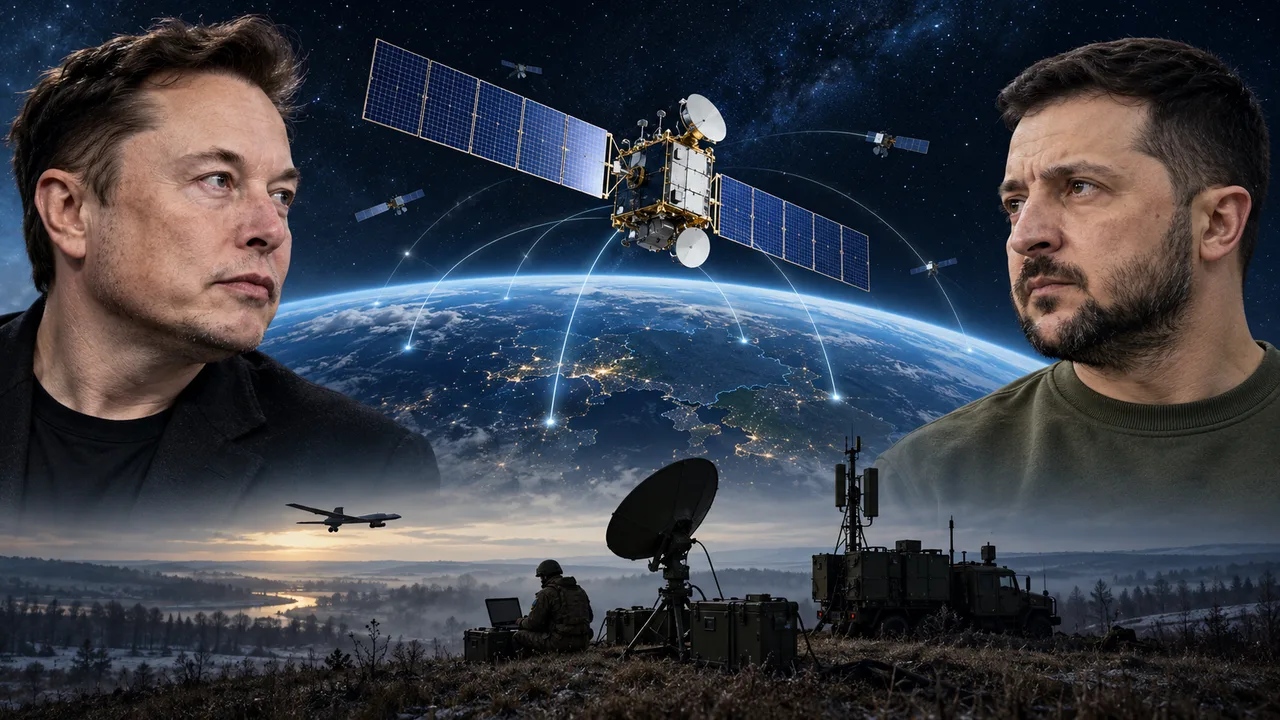

Governments announce the support. Taxpayers help finance it. That is the starting point missing from much of the discussion about Ukraine’s proposed independent satellite communications network.
The appeal of the project is clear: Kyiv wants greater control over communications vital to its defence. But when a country relies heavily on overseas assistance, an announcement about independence invites another question.
Who pays for it?
On 22 October, Ukraine’s defence ministry signed a letter of intent with Finnish companies Nokia and ICEYE to explore sovereign satellite communications. The companies envisage systems that give government customers ownership and control of satellites, ground infrastructure and terminals. Their announcement does not identify a price or a funding package for a Ukrainian network.
That means there is no basis for claiming Britain or the United States has agreed to buy these particular satellites. But it also means the financial question remains unanswered while the promise of sovereignty attracts the headlines.
Britain’s contribution to Ukraine’s wider defence is already substantial. The government’s factsheet, updated on 13 October, records £16 billion committed in military support since Russia’s full-scale invasion and a pledge to sustain £3 billion annually until 2030–31 and for as long as needed. These are public commitments, not the personal generosity of the politicians announcing them.
American support likewise rests on public funding authorised by Congress. The official US oversight programme tracks spending across military assistance, economic support, humanitarian relief and related operations. Those totals must be handled carefully: expenditure on the wider response includes activity outside Ukraine and is not simply money handed to Zelenskyy. Nevertheless, American public finances have borne a substantial part of the response.
The question, therefore, reaches beyond which ministry eventually signs a satellite contract. If outside assistance covers expenditure Ukraine would otherwise have to finance, it can create room for other spending. That is an economic possibility, not proof that a particular British payment has been diverted or used outside its agreed purpose.
Calling a project Ukrainian-owned does not tell the British, American or European public whether they will be asked to help fund its construction, operation or future replacement.
Nor does every form of assistance carry the same cost. Grants, loans and guarantees create different obligations. Some arrangements seek repayment from revenues associated with frozen Russian assets or future reparations.
Ukraine’s finance ministry describes the EU’s support loan for 2026–27 as providing up to €90 billion, including €60 billion for defence. It says the scheme is financed by EU borrowing, backed by the EU budget, with repayment expected from future Russian reparations. That is a financing mechanism, not a confirmed allocation to the satellite proposal.
Those distinctions matter. They explain who supplies the money now, who guarantees it and who is expected to repay it. Describing everything as either a gift or a cost-free loan conceals more than it explains.
There is a serious defence argument for the proposed network. Recent restrictions disrupted Ukrainian drone operations. On 24 October, Ukraine reported that Starlink and Starshield connections had returned to the speeds its forces required. Restored service, however, does not remove the vulnerability of depending on infrastructure controlled elsewhere.
Supporters can reasonably argue that helping Ukraine secure its communications also serves the security interests of its allies. That case deserves consideration. It should come with an explanation of the cost, the alternatives and the commitments expected from those allies.
Before any public money is committed to this network, the relevant governments should disclose who contributes, what Ukraine pays, who owns the assets and who carries the continuing costs. Any financing conditions affecting Ukraine’s control should also be explained.
Supporting Ukraine and scrutinising public expenditure are compatible. Taxpayers do not lose their right to ask questions because a project has a compelling military purpose.
Ukraine may have good reasons to seek satellite independence. Governments asked to finance it must explain why their contribution is justified.
The announcement tells us who wants control. It has yet to tell us whose money will make that control possible.