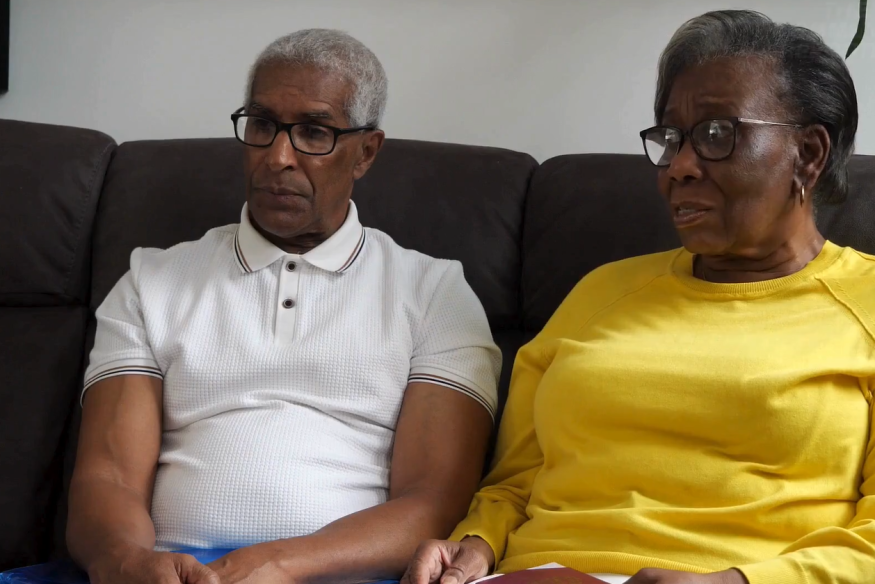

The Royal London Hospital’s Sickle Cell Emergency Care Day Unit, widely described by patients as a “lifeline” is set to close today ending its six-month pilot, leaving families fearing a return to what many call “A&E hell.” For a condition that can turn fatal in hours, the decision has sparked anger, anxiety and renewed scrutiny of how the NHS treats sickle cell patients, most of whom are of African or Caribbean heritage.
Sickle cell crises can strike without warning, causing extreme pain, organ damage, infection and, in the worst cases, death. The Day Unit was created to bypass A&E departments, where patients have repeatedly reported long waits, disbelief, undertreatment and racial bias — failings documented in the 2021 Parliamentary report titled: No One’s Listening. During the pilot, patients were treated directly by specialist haematology staff, many describing it as the first time they felt safe in a medical setting.
‘People will die’, says Delo Biye who has sickle cell and is fighting for the emergency sickle cell day unit to remain open. https://t.co/QmKTuFO91i pic.twitter.com/XeW8aed2Sv
— Melissa Sigodo (@melissasigodo) January 23, 2026
The development was first reported by journalist Melissa Sigodo in The Source, whose investigation revealed the hospital’s intention to close the unit despite a petition nearing 50,000 signatures and growing political pressure. Campaigner and sickle-cell sufferer Delo Biye, who launched the petition, has been central in mobilising families and exposing the human impact of the decision. Their combined efforts have ensured the issue cannot be quietly sidelined.
Bouncer - a well know online commentator features If Royal London Hospital Closes The Scikle Unit, People Will D*E
According to The Source, Biye — who has the most severe form of the disease (Hb SS) — travels 10 miles from Sidcup to reach the unit. He told Sigodo he is “angered” and “horrified” by the closure, warning that returning to A&E could mean waiting up to 12 hours for pain relief. For sickle cell patients, such delays can be life-threatening.
Sigodo highlights that the pilot was funded by the North East London Integrated Care Board as part of a new emergency-care model designed to address the systemic failings exposed in No One’s Listening. Patients told the publication that the unit provided “the best care” they had ever received, delivered by staff who understood the disease and its urgency.
Advertisement
 Ship Away - Windrush board game - by Patricia Jones
Despite this, the hospital says the pilot was always intended to run for a fixed period and that it is now “evaluating the trial to shape future plans.” It insists there will be “no change to the routine management” of sickle cell patients and that its Haematology Day Unit will extend its hours. But, as Sigodo reports in The Source, the parliamentary inquiry found that haematology teams are often not informed when sickle cell patients arrive in A&E — a communication failure that prolongs pain and increases risk.
The closure has alarmed long-standing community organisations. Beverly De-Gale, co-founder of the African Caribbean Leukaemia Trust (ACLT), told The Source that sickle cell “is not a trial” and warned that losing the unit would deepen existing racial health inequalities. ACLT staff member Jade McGhee added that shutting the pilot would place additional strain on an already overstretched NHS.
Advertisement

Sickle cell advocate Sayo Talabi, who lost two sisters to the disease — has also joined the campaign, calling the closure “atrocious” and organising protests to defend what she describes as an “underserved” community. She told Sigodo that with nearly 300 babies born with sickle cell each year, the condition is rising and the NHS is not prepared.
For many, the most painful part is the symbolism. After decades of being dismissed, disbelieved and left to suffer in corridors, the pilot unit represented a rare moment of progress, a recognition that sickle cell patients deserve dignity, urgency and specialist care. To see it withdrawn so abruptly feels like a step backwards into a system that has repeatedly failed them.

The Royal London says it is “evaluating the pilot.” But for patients who have already lived through the consequences of A&E delays, evaluation is not enough. They need action. They need a system that listens. And they need this unit to stay open.
JamRadio may earn a commission if you purchase products advertised on our website at no extra cost to you.
Follow JamRadio: