July 31, 2026 - 1575 views

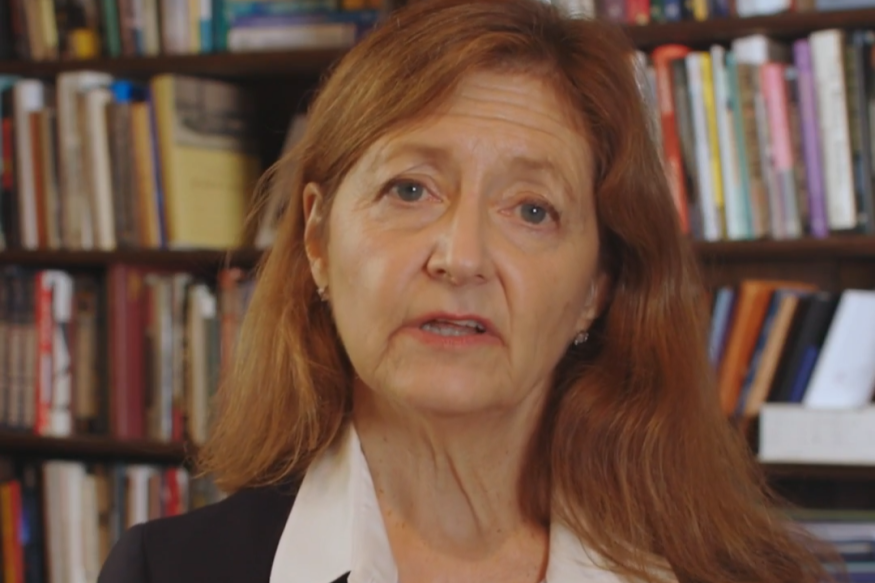
Britain’s first Black woman MP has had the Labour whip restored following a second suspension. Her return closes another turbulent chapter in her relationship with the party, while restoring one of Parliament’s most persistent voices for victims of the Home Office Windrush scandal.
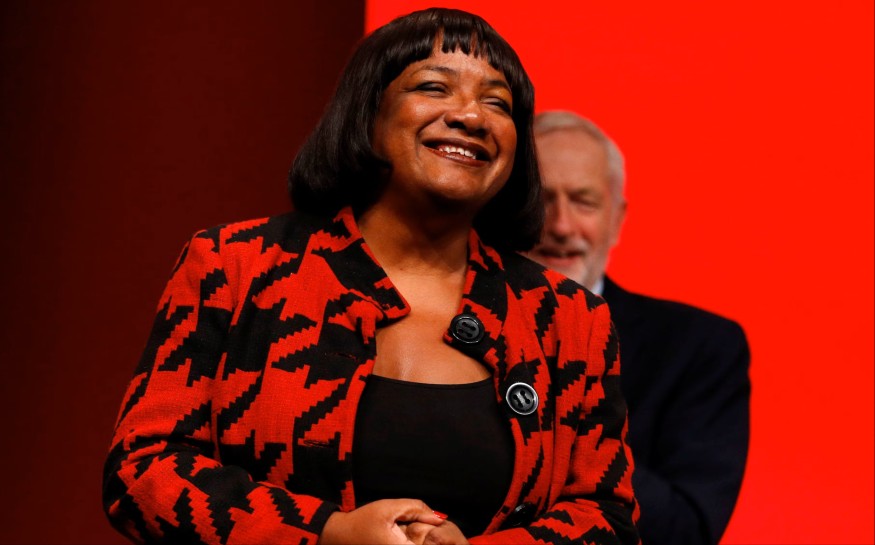
Diane Abbott has been formally readmitted to the Labour Party and has had the Labour whip restored in the House of Commons, ending more than a year in which the veteran Hackney North and Stoke Newington MP sat as an independent.
Labour said the decision followed a disciplinary process conducted under party rules and approved by its independent review board.
Advertisement
Collect Akimyax Anime Keyrings
Abbott said she had received a formal warning over a previous social-media post in which she inadvertently referred to the Israel Defence Forces as the “Jewish Defence Force”. She acknowledged that the wording conflated the actions of the state of Israel with the Jewish community, apologised for the hurt caused and reaffirmed that she remained a lifelong opponent of racism in all its forms.
Abbott’s return is significant not simply because of her longevity, but because of her unique place in British political history.
First elected in 1987, she became the first Black woman to sit in the House of Commons. Following her re-election at the 2024 general election, she became Mother of the House as its longest continuously serving woman MP.
Advertisement

Her recent relationship with Labour, however, has been marked by suspension, internal investigations, public disagreements and uncertainty over whether her parliamentary career would be allowed to continue under the party’s banner.
The first suspension came in April 2023 after Abbott wrote a letter to The Observer which distinguished between the racism experienced by Black people and the prejudice experienced by Jewish, Irish and Traveller communities. The comments were widely condemned. Abbott withdrew the letter and apologised, saying that racism took many forms and that Jewish people, Irish people and Travellers had suffered its effects.
After a lengthy disciplinary process, a formal warning and antisemitism-awareness training, the whip was restored in May 2024. That did not immediately end the controversy. A public dispute followed over whether Abbott would be permitted to stand as Labour’s candidate at the approaching general election. She was eventually confirmed as the party’s candidate and was re-elected to Parliament for a tenth term. That period also coincided with one of the most disturbing episodes of Abbott’s public life.
Advertisement

When Parliament debated alleged racist and violent remarks made about her by Conservative donor Frank Hester, Abbott repeatedly stood in the Commons seeking to speak but was not called by the Speaker.
The spectacle of Britain’s first Black woman MP being discussed across the chamber while being unable to speak for herself deepened public concern about the way she was being treated.
In July 2025, Abbott was suspended for a second time after a BBC interview in which she maintained that there was a distinction between racism based upon visible skin colour and other forms of racism. Labour again removed the whip, leaving Abbott to sit as an independent until this week’s decision.
A steadfast voice for Windrush victims
For members and descendants of the Windrush generation, Abbott’s record is particularly important. When the Windrush scandal erupted nationally in 2018, Abbott was serving as Shadow Home Secretary.
She used that position to challenge the Home Office over wrongful detention, deportation, removal targets, the denial of employment, benefits and healthcare, the destruction of people’s livelihoods and the wider consequences of the government’s hostile-environment policies.
Advertisement

Abbott argued that the scandal could not be separated from policies introduced while Theresa May was Home Secretary and called on the government to establish how many people had been detained, deported or prevented from returning to Britain.
She demanded that compensation address the real and often catastrophic losses suffered by victims. That included lost employment, benefits, pensions, access to healthcare and public services, as well as the trauma, pain and suffering caused by the Home Office.
Abbott also called for victims to be given proper access to legal assistance, recognising that people who had already been failed by the immigration system could not reasonably be expected to challenge that same system without support. She repeatedly made clear that Windrush compensation was not charity.
It was redress owed to people who were legally entitled to live in Britain, but whose rights, identity and status had been denied or questioned by the state.
Abbott also warned that the scandal extended beyond the Caribbean. People from other Commonwealth countries had been affected by the same legislation, policies and Home Office practices.
As the years passed and the immediate political attention surrounding the scandal began to fade, Abbott continued raising concerns about delays, inadequate awards, restrictive evidential requirements and the low number of victims receiving compensation.
Advertisement

She challenged the failure to reach people who had become understandably fearful of the Home Office and repeatedly drew attention to the emotional devastation suffered by a generation who had always understood themselves to be British.
Abbott’s connection to the Windrush generation is also personal. Her parents travelled to Britain from Jamaica during the post-war period, with her mother working as a nurse and her father as a welder.
Her interventions have therefore been informed not only by her political responsibilities, but by a direct understanding of the contribution made by Caribbean families to Britain’s public services, economy and communities.
This is not the record of a politician who discovered Windrush only after it became politically fashionable.
It is a sustained record of challenging the Home Office, questioning ministers, confronting the hostile environment and insisting that victims must be treated as people whose rights were violated, rather than as immigration cases seeking special treatment.
In 2014 Abbot forewarned that policies being enshrined in the 2014 immigration act were hostile to Caribbean and Commonwealth migrants who had long-settled in the UK over decades and the descendants, but those warning were ignored.
The whole record must be remembered
Abbott broke one of Parliament’s most imposing racial barriers. She survived years of hostility, repeated personal attacks and an often deeply strained relationship with her own party.
Throughout that turmoil, her position on Windrush remained remarkably consistent: the victims were legally entitled to be here, the British state had wronged them, compensation was not charity and justice could not be delivered through apologies alone.
Her journey with Labour has taken her from the front bench to suspension, from reinstatement to uncertainty over her candidacy, from re-election and elevation as Mother of the House to another suspension — and now, once again, to readmission.
Advertisement